Essential Chimney Repair Port Chester NY: 2026 Guide for Port Chester and Sound Shore Residents
Most homeowners assume their chimney is fine until smoke starts backing up into the living room. By that point, what could have been a $300 tuckpointing job has quietly turned into a $3,000 liner replacement. We’ve seen it happen dozens of times across Port Chester, White Plains, Mamaroneck, and the surrounding Sound Shore communities and it’s almost always avoidable. Chimney repair Port Chester NY is something we deal with year-round, but the warning signs that demand immediate attention are things you can spot yourself, right now, before the cold season locks you into emergency pricing and long wait lists.
Here’s what to look for, what each sign means in plain terms, and when to call us versus when you have a little breathing room.
The Crack You Can See From the Driveway
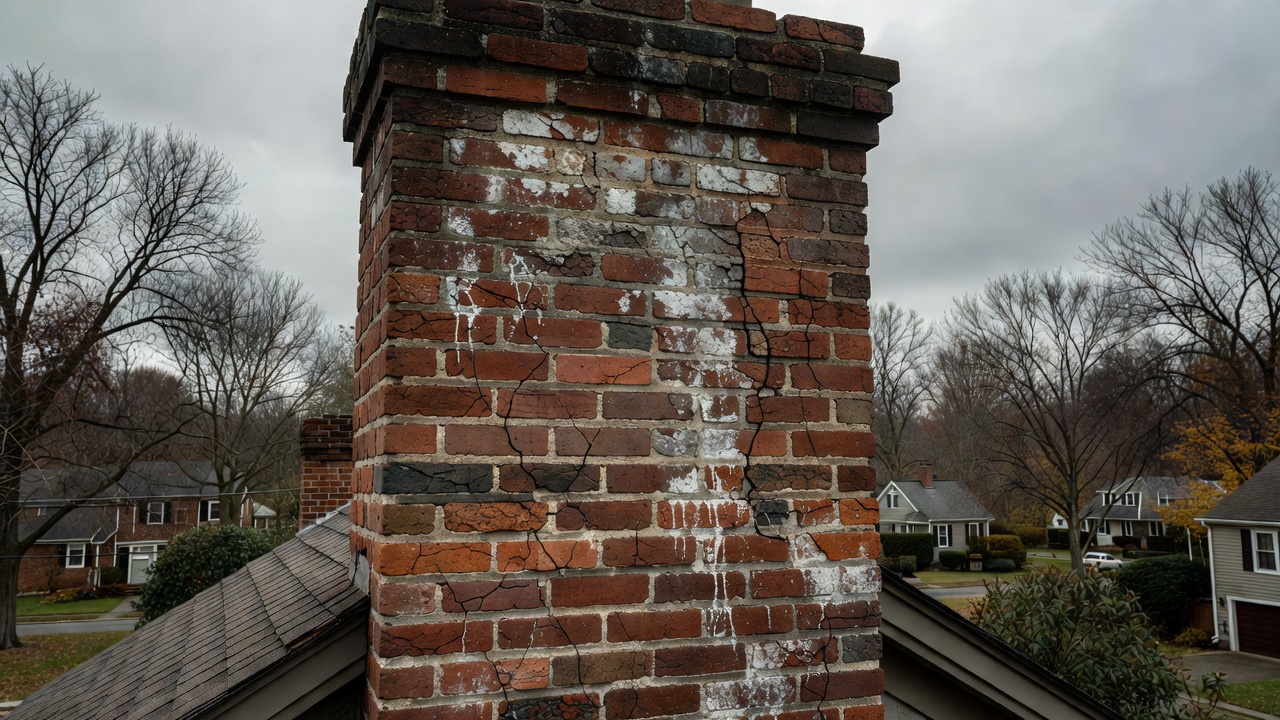
Stand across the street and look at your chimney stack. Vertical or stair-step cracks running through the brick or mortar joints are not cosmetic. In Westchester County’s climate, water gets into those gaps, freezes, expands, and widens them with every cycle. The National Chimney Sweep Guild notes that freeze-thaw cycles in cold-climate regions like the Northeast accelerate spalling and mortar joint deterioration, making annual masonry inspections especially critical for homes in this area. If the crack runs more than a few inches or if you can fit a credit card into the gap, call us now don’t monitor it through another winter.
Chunks of Brick or Mortar on the Ground Below the Chimney
If you’re finding red clay rubble or sandy mortar dust in your gutters, on the roof, or on the ground around your foundation, your chimney is actively shedding material. We’ve pulled quarter-size flake debris from gutters on Stuyvesant Avenue-area homes in Port Chester after a single nor’easter. Spalling at that stage means the masonry face is saturated and failing. This is a call-now situation the longer you wait, the deeper the water penetration goes, and what started as surface spalling becomes structural damage to the crown or the flue itself.
A White Staining on the Brick Face
Efflorescence that chalky white streaking on chimney brick looks like a cosmetic issue but it’s actually a moisture flag. It forms when water moves through masonry and carries soluble salts to the surface. The staining itself won’t collapse your chimney, but what’s causing it will. According to the CSIA, a properly maintained chimney cap can reduce moisture intrusion by up to 90%, significantly extending the life of the chimney liner and masonry. If you’re seeing heavy efflorescence on a chimney that already has a cap, the cap may be cracked, improperly seated, or the crown is failing. Keep an eye on it if it’s light and isolated; call us now if the staining runs more than a foot down the exterior face.
A Smoky Smell in the House When the Fireplace Isn’t Running
A homeowner in Port Chester called us last March after noticing a persistent smoky, campfire-like odor in their second-floor hallway, even though they hadn’t used the fireplace since January. When we ran a camera inspection, we found a significant creosote shelf built up in the upper flue enough to restrict draw and allow odors to migrate back into the living space through draft reversal. The CSIA reports that creosote can accumulate quickly and that even a 1/8-inch buildup is sufficient to cause a chimney fire. A persistent smoky smell between uses is a call-now sign, not a wait-and-see one.
Your Damper Won’t Seal Completely
Reach up into the firebox and test your damper plate by feel. If cold air is pouring in around the edges, or if the handle feels loose and the plate rocks rather than seating firmly, the damper is either warped, corroded, or the frame has shifted. A failing damper lets outdoor air, pests, and moisture funnel straight down into your living space. In older Harrison and Larchmont colonials, we see cast-iron dampers that have cracked under years of thermal cycling. This one falls in the middle you won’t have an emergency this week, but schedule a repair before the heating season or you’ll pay for it in energy bills and a damper that’s fully seized by November.
Rust Stains Inside the Firebox
Orange rust streaking down the interior firebox walls or staining the floor of the firebox tells you water is getting in from somewhere above a cracked crown, a failed cap, a deteriorated flashing seal. According to the National Fire Protection Association, failure to clean and maintain chimneys is the leading cause of home heating fires in the United States, accounting for 30% of such fires annually. Rust accelerates the breakdown of the damper assembly and the firebox joints. If you’re also noticing the damper is stiff or the mortar between the firebox bricks is soft and crumbly, call us now. Rust alone without other symptoms monitor it through one inspection cycle, but don’t skip the inspection.
Flashing That’s Lifting, Buckled, or Missing Caulk
The flashing is the metal seal between your chimney and your roof. Get up on a ladder safely and look at where the chimney meets the shingles. If you see the metal pulling away from the masonry, gaps in the caulk bead, or visible daylight between the step flashing and the brick, you have an active leak path. In White Plains and Rye Brook, we track a sharp increase in flashing calls every April and May, right after the freeze-thaw season has worked the metal lose. Failed flashing leads to attic moisture, damaged rafters, and interior ceiling stains that homeowners often mistake for a roof problem. This is a call-now repair the fix is relatively simple, the damage from ignoring it is not.
Your Liner Is Cracked and the Camera Is How You Know
You can’t see your flue liner from the firebox floor, and most homeowners don’t know what’s up there until we run a camera. NFPA 211 requires that chimneys, fireplaces, and vents be inspected at least once per year to ensure they are structurally sound and free from deposits. A cracked clay tile liner is one of the most common findings on older homes throughout Mamaroneck and the Sound Shore corridor, and it’s the one that carries real life-safety stakes gases, including carbon monoxide, can escape through liner cracks into living spaces. The U.S. Consumer Product Safety Commission estimates that carbon monoxide poisoning from improperly maintained fireplaces and heating appliances sends approximately 50,000 Americans to emergency rooms each year. A cracked liner is never a monitor-it situation. If we find one, we stop the fireplace from being used until it’s repaired.
The Cost of Waiting One More Season
Every fall, our schedule in Port Chester and the surrounding Westchester towns fills up fast typically by late September for October and early November appointments. Homeowners who call us in December to get a chimney repaired before Christmas are usually looking at a two-to-three-week wait at minimum, and some repairs simply can’t be done safely in freezing temperatures without additional prep work that adds cost. A tuckpointing job that runs $400 to $600 in late summer can escalate significantly if the deterioration advances through another winter. Booking your chimney repair Port Chester NY in late summer or early fall isn’t just about convenience it’s the most cost-effective decision you can make for the structure.
What We Recommend Before You Call
Do a five-minute visual check: look at the chimney exterior from the ground, check the firebox interior for rust and mortar condition, test the damper by hand, and note any odors when the fireplace is cold. Write down what you see. When you call us, that information helps us come prepared with the right materials and the right crew for the scope of work. We serve Port Chester, White Plains, Rye, Rye Brook, Harrison, and the full Sound Shore area and we’d rather hear from you in August than get an emergency call in February.
Contact Chimney Experts in Rye to schedule a chimney inspection or repair estimate. We’re local, we know these homes, and we’ll give you a straight answer about what needs attention now and what can wait.
Frequently Asked Questions About Chimney Repair in Port Chester NY
- How do I know if my chimney needs repair or just a cleaning?
- A cleaning removes creosote and debris from the flue. Repair addresses structural issues cracked mortar, damaged flashing, spalled brick, or a failing liner. Most of the warning signs above point to repair needs, not just cleaning. We typically recommend a camera inspection alongside any sweep so we can give you the full picture. Many Port Chester and White Plains homeowners are surprised to find structural issues they couldn’t see from the firebox floor.
- What time of year is best to schedule chimney repair in the Port Chester and White Plains area?
- Late summer through early fall August through mid-October is the sweet spot. The weather is cooperative for masonry work, our schedule still has availability, and you’ll have everything buttoned up before the heating season starts. Waiting until November or December typically means a longer wait, and some mortar and sealant applications require temperatures above 40 degrees Fahrenheit to cure properly, which limits what we can do mid-winter.
- Is chimney repair something I can put off for a year if the fireplace seems to be working fine?
- It depends on what’s wrong. A slightly loose damper or light efflorescence yes, you have some time if you schedule an inspection soon. A cracked liner, failed flashing, or actively spalling masonry no. The fireplace “working fine” is not a reliable indicator of chimney health. A cracked liner can allow carbon monoxide to migrate into your living space without any visible symptoms in the firebox. NFPA 211 calls for annual inspections for exactly this reason, and we follow that standard for every home we service in Westchester County.