Warning Signs Your Mamaroneck Home Needs a Chimney Sweep Now
Most chimneys that cause house fires or carbon monoxide problems showed warning signs weeks or months before anything went wrong. If you’re looking for a chimney sweep in Mamaroneck NY, the signs below are your clearest signal to stop waiting. Some warrant a call today. Others give you a short window to schedule before the problem gets expensive.
Why fall timing matters more in Mamaroneck than you might expect
Mamaroneck sits right on Long Island Sound. That means salt air, higher humidity year-round, and winters that cycle between hard freezes and wet thaws in the span of a single week. Those conditions hit older masonry hard. Many of the homes we service along the Shore Acres and Orienta sections of town were built in the 1930s through 1960s, and their chimneys have years of deferred maintenance baked in.
The National Chimney Sweep Guild notes that freeze-thaw cycles in cold-climate regions like the Northeast accelerate spalling and mortar joint deterioration, making annual masonry inspections especially critical for homes in Westchester County. In Mamaroneck, that cycle starts earlier than most homeowners expect, often by late October, and can continue into March.
Booking a chimney sweep in late August or September costs the same as booking in November, but November appointments fill up fast and leave little time to address anything found during the sweep. A cracked flue tile discovered on November 10th, with a nor’easter forecast for the following week, is not a comfortable situation.
Signs that mean call a pro now
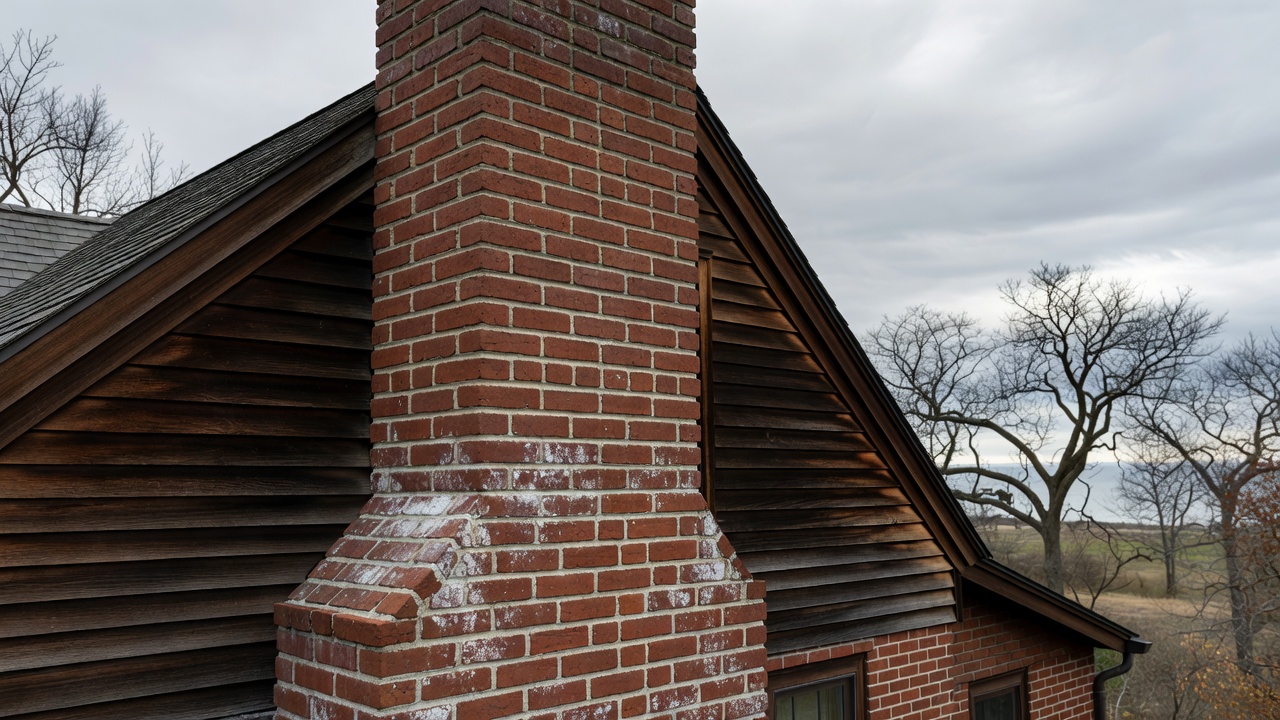
White staining on the exterior brick
That chalky white residue is efflorescence, salt deposits left behind as water moves through the masonry and evaporates on the surface. It’s a reliable indicator that moisture is already working its way into your chimney’s structure. By the time you can see it clearly from the yard, the process has usually been going on for at least one full season. Left alone through another Westchester winter, it accelerates spalling and mortar failure.
A smoky smell inside the house when the fireplace isn’t in use
This one catches people off guard in summer. If you’re walking through your living room on a July afternoon and picking up a faint chimney odor, that’s typically creosote deposits heating up as attic temperatures rise, combined with a draft pulling air down the flue. The Chimney Safety Institute of America reports that creosote can accumulate quickly and that even a 1/8-inch buildup is sufficient to cause a chimney fire. A smell like this in the off-season is your cue to schedule a sweep before you light the first fire of fall.
Visible chunks of mortar or brick pieces in the firebox
If you open the damper and find debris on the floor of the firebox, something is breaking apart above you. It might be spalling brick, deteriorating mortar joints, or a damaged smoke chamber. Any of these conditions can allow combustion gases and heat to reach areas of the home they should never reach. This is not a “monitor it” situation. A camera inspection is needed before that fireplace is used again.
Black staining around the fireplace opening on the wall or mantel
Soot escaping past the firebox opening means the fireplace isn’t drafting correctly. The cause could be a partially closed or warped damper, a blocked flue, or a flue sized incorrectly for the firebox opening. We’ve seen this in a number of Larchmont and Mamaroneck homes where previous owners added gas inserts without updating the liner, effectively choking the draft. Whatever the cause, smoke back-drafting into your living space means carbon monoxide is a real risk.
Rust on the damper or inside the firebox
Rust means water is getting in. The most common entry points are a missing or damaged chimney cap and a failed crown. According to the CSIA, a properly maintained chimney cap can reduce moisture intrusion by up to 90%, significantly extending the life of the chimney liner and masonry. If your damper is stiff, won’t open fully, or shows visible rust when you look up with a flashlight, schedule a sweep and inspection together. The sweep alone won’t fix the underlying moisture problem.
A rattling or knocking sound in the chimney on windy days
A loose chimney cap, a damaged flue tile that has shifted, or even an animal that has taken up residence can all produce this. We get calls from Harrison and Port Chester homeowners every spring after birds and squirrels have nested in uncapped flues over the winter. Beyond the nuisance, nesting material is a fire hazard and can block the flue entirely. If you hear anything moving or rattling up there, have someone look before you assume it’ll sort itself out.
Signs that are worth watching but not emergencies
Small hairline cracks in the mortar joints
Hairline cracks in the mortar between bricks are common in older Westchester homes and don’t always mean immediate danger. What they do mean is that you’re within a cycle or two of needing tuckpointing. If the mortar is crumbling or you can press it out with a finger, that’s a different story. For hairline cracks, schedule an inspection and get a repair estimate before they open up through a wet winter.
A slight draft or cold air coming down the flue when the fireplace is not in use
Some cold air infiltration through a closed damper is normal in older systems. If it’s significant enough that you feel it standing a few feet away, the damper plate may be warped or not seating properly. It’s worth mentioning during your next annual sweep, but it doesn’t require an emergency call. A top-sealing damper is a straightforward fix and also helps with energy costs.
Minor discoloration on the ceiling above the fireplace
A faint yellowish or brownish stain directly above the firebox that hasn’t changed in years might just be old smoke residue from before the home’s previous insulation work. Have a tech confirm it during your sweep. If it’s growing or if the drywall feels soft to the touch, that changes things and moves it into the “call now” category.
What a homeowner in Mamaroneck called us about last fall
A homeowner near Mamaroneck Harbor called us in mid-October after noticing a strong smoky odor in their second-floor hallway. They had a wood-burning fireplace on the first floor that they hadn’t used since the previous spring. When our tech ran a camera inspection, we found a partially collapsed flue tile about eight feet up, likely from a hard freeze the prior winter combined with existing moisture damage. They’d been planning to use the fireplace that weekend for the first time of the season. The repair took about a week to complete, and we were glad they called when they did rather than after lighting a fire.
The real cost of waiting past September
A standard chimney sweep in Mamaroneck NY typically runs in the range of $150 to $250 depending on the flue configuration and the last time the system was serviced. A camera inspection, which we recommend for any chimney that hasn’t been looked at in more than two years, adds to that cost but provides documentation of actual flue condition. According to the National Fire Protection Association, failure to clean chimneys is the leading cause of home heating fires in the United States, accounting for 30% of such fires annually. A chimney fire or a carbon monoxide event costs far more than a sweep, in every sense of that word.
Waiting until November also means you’re competing with every other Rye, Rye Brook, and Mamaroneck homeowner who had the same idea. Our fall calendar fills up starting in September, and once we’re into October, same-week appointments are rare. The homeowners who schedule in late summer get their choice of dates and have time to address repairs before the first cold weekend.
Frequently Asked Questions About Chimney Sweep Mamaroneck NY
How often should Mamaroneck homeowners schedule a chimney sweep?
NFPA 211 requires that chimneys, fireplaces, and vents be inspected at least once per year. For homes in Mamaroneck and the broader Sound Shore area, where salt air and freeze-thaw cycles accelerate deterioration, annual service isn’t just a code recommendation. It’s practical maintenance. If you burn wood regularly, twice a year may be appropriate depending on how much creosote your system accumulates.
What’s included in a chimney sweep versus a full camera inspection?
A chimney sweep removes combustion deposits, debris, and blockages from the flue. A camera inspection uses a video system to document the condition of the flue liner, smoke chamber, and firebox from the inside. They’re related but different services. The sweep cleans what’s there. The camera shows what’s happening to the structure itself. For any chimney that hasn’t been professionally evaluated in more than two years, we recommend both together.
Can I use my fireplace if I see one of the warning signs above?
For signs like smoky odors, visible mortar debris in the firebox, soot staining on walls, or audible sounds from the flue, the answer is no. Stop using the fireplace and schedule an inspection before the next fire. For lower risk signs like hairline mortar cracks or a slightly stiff damper, you may be able to use the fireplace with caution while waiting for a scheduled appointment, but confirm that with a professional rather than making that call on your own.
Ready to schedule your chimney sweep in Mamaroneck?
Chimney Experts in Rye serves Mamaroneck, Larchmont, Harrison, Rye Brook, Port Chester, and the surrounding Sound Shore communities. If you’ve spotted any of the signs described here, or if it’s simply been more than a year since your last service, contact us to schedule a sweep and inspection before the fall rush. The earlier in the season you call, the more options you’ll have, and the more time we’ll have to address anything that turns up.
Related from Chimney Experts in Rye: Essential Chimney Repair Port Chester NY · What Purchase NY Homeowners Get Wrong About Chimney Inspection · Chimney Repair in Rye Brook, NY